
Unclogging a sewer line might feel like you’re tackling the world’s most stubborn problem, but with the right approach, it’s manageable. You need to know the signs of a blockage—like water backing up or strange gurgling sounds—to pinpoint the problem’s location. Once identified, the key is using the proper tools, such as a plumber’s snake or hydrojetting equipment, with expert precision. But what if the clog persists or you encounter unexpected complications? Understanding how to navigate these challenges safely can save time and prevent further damage, making expert advice invaluable.
Identify the Clog Location
Locating the clog in your sewer line is crucial for effectively and safely addressing the issue. Begin by observing signs of a blockage. Water backing up in sinks, tubs, or toilets is a clear indicator of a sewer line problem. Pay attention to unusual gurgling noises and unpleasant odors; these often signal that wastewater isn’t flowing correctly.
Identify which fixtures are affected to pinpoint the clog’s location. The issue likely originates from the main sewer line if all drains are slow. The clog could be in a branch line if only specific areas are problematic. You can assess this by flushing toilets and running water in different sinks to see where the backup occurs.
Safety is your top priority. Avoid using chemicals, as they can damage pipes and pose health risks. Instead, focus on inspecting the cleanout ports, which offer direct access to the sewer line. Wearing gloves and goggles ensures your protection from any hazardous materials.
Gather Necessary Tools
Prior to unclogging your sewer line, make sure you have the right tools, such as a plumber’s snake, adjustable wrench, and sturdy pair of gloves, for safe and efficient work. Proper preparation guarantees your safety and streamlines the process, allowing you to help others effectively. Begin by gathering the essential tools for the task. This will save time and prevent potential injuries or mishaps.
Here’s a list of tools and protective gear you’ll need:
- Plumber’s Snake: Essential for reaching deep clogs and breaking them apart.
- Adjustable Wrench: Handy for loosening or tightening pipe fittings as needed.
- Gloves: Choose a durable pair that offers protection from sharp edges and unsanitary conditions.
- Eye Protection: Shields your eyes from debris and splashes during unclogging.
- Bucket and Towels: These are useful for catching water spills and tidying your workspace.
Use a Plumber’s Snake
To tackle a sewer line clog effectively, insert the plumber’s snake into the access point, steadily guiding it through the pipe until you feel resistance. This resistance indicates you’ve reached the clog. Gently rotate the snake’s handle clockwise to break up the obstruction, ensuring you don’t apply excessive force that might damage the pipe. Maintain a firm grip on the snake for better control and to prevent it from slipping inside the pipe.
When using a plumber’s snake, it’s essential to wear safety gloves and goggles. Sewer lines can contain harmful bacteria, so protecting yourself is essential. Also, ensure the area is well-ventilated to avoid inhaling any noxious fumes. Slowly retract the snake, checking for any debris or waste clinging to it, which confirms you’ve dislodged part of the clog.
Once the snake is out, flush the line with water to completely clear the blockage. If water flows freely, you’ve likely resolved the issue. However, consult a professional plumber to prevent further complications if the clog persists. Remember, your careful approach maintains the plumbing system and serves those relying on its function.
Try Hydro Jetting
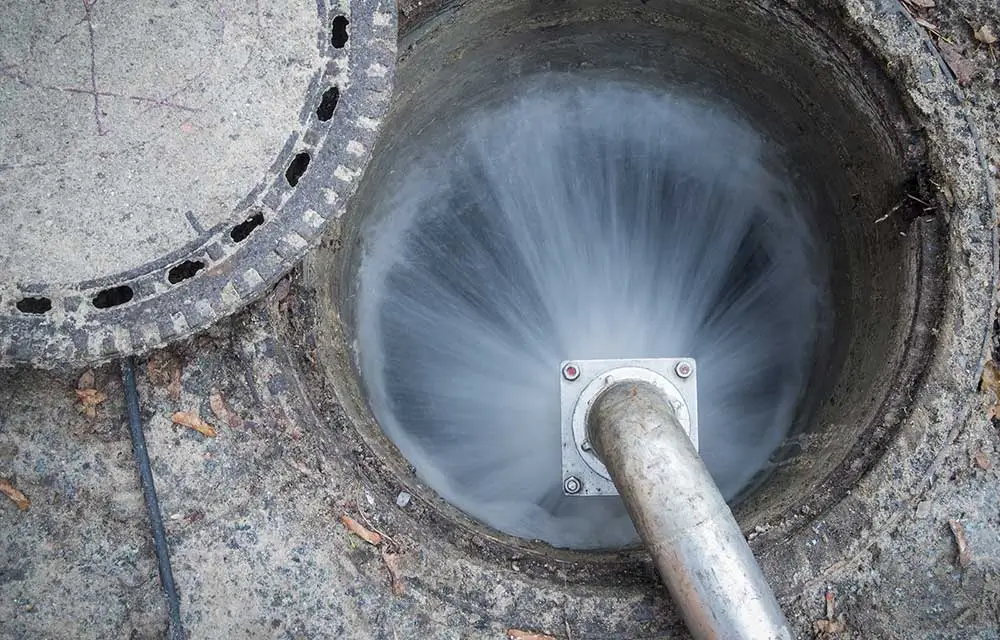
Consider hydro jetting a powerful and safe method to clear stubborn sewer line clogs. It uses high-pressure water jets to thoroughly clean the pipes without causing damage. Hydrojetting involves using a specialized hose and nozzle that sprays water at pressures up to 4,000 psi, effectively removing grease, tree roots, and other obstructions. This technique is efficient and environmentally friendly, as it doesn’t rely on harsh chemicals.
When thinking about hydro jetting, keep these key points in mind:
- Professional Expertise Required: Make sure you hire a licensed plumber with experience in hydrojetting to avoid potential damage.
- Pipe Inspection: Before hydrojetting, conduct a video inspection to assess your pipes’ condition and identify the location of blockages.
- Safety Precautions: High-pressure water can be dangerous; ensure all safety measures are strictly followed to protect everyone involved.
- Long-term Effectiveness: Hydro jetting thoroughly cleans the pipe walls, clearing current clogs and preventing future build-up.
- Eco-Friendly Choice: This method avoids introducing harmful chemicals into your system, making it a safer choice for the environment and your home.
Utilize Chemical Cleaners Wisely
When using chemical cleaners to unclog your sewer line, select products specifically designed for plumbing use to prevent pipe damage and maintain safety. It’s essential to read labels carefully and choose a cleaner compatible with your plumbing material—PVC, copper, or cast iron. Opt for enzymatic or bacterial-based cleaners, as they are safer for your pipes and the environment. These cleaners use natural enzymes to break down blockages and are less corrosive than traditional chemical options.
Before you start, make certain the area is well-ventilated. Open windows or use fans to disperse any harmful fumes that might arise. Wear protective gloves and eyewear to safeguard against splashes. Pour the cleaner directly into the sewer line as directed by the product instructions, avoiding any contact with your skin. Be patient; some solutions require time to work effectively, so allow the recommended period before flushing with water.
Implement Natural Solutions
You’ll often find that simple household items like baking soda and vinegar can effectively clear minor clogs in your sewer line while guaranteeing safety and environmental friendliness. These natural solutions keep harsh chemicals out of your pipes and safeguard the environment and those around you. Here’s a step-by-step guide to using these natural methods:
- Baking Soda and Vinegar: Pour half a cup of baking soda down the drain, followed by half a cup of vinegar. Cover the drain to contain the fizzing reaction, then flush with hot water after 15 minutes.
- Salt and Baking Soda: Mix half a cup of salt with half a cup of baking soda. Pour it into the drain, leave it overnight, and flush with boiling water in the morning.
- Hot Water: Simply pouring boiling water down the drain can break down grease and minor blockages.
- Biological Enzymes: Use enzyme-based cleaners that naturally digest organic materials without damaging pipes.
- Plunger: A plunger can dislodge debris using suction, making it a practical, non-toxic option.
Always remember that your safety is paramount. When handling these solutions, wear gloves, keep the area well-ventilated, and wear appropriate eye protection.
Inspect With a Sewer Camera
Using a sewer camera allows you to accurately identify blockages and assess the condition of your pipes without unnecessary guesswork or potential damage. This technology allows you to pinpoint the exact location of clogs, which is essential for effective and safe removal. A sewer camera is a flexible rod with a high-resolution camera attached. As you maneuver it through the pipes, real-time video footage helps you determine the nature and severity of the blockage.
When using a sewer camera, it’s essential to follow safety procedures. Always wear protective gear, such as gloves and goggles, to guard against exposure to harmful bacteria and chemicals. Ensure the camera is suitable for your pipe size to avoid causing any additional damage. If you’re not experienced with this equipment, consider consulting a professional plumber who can perform the inspection and interpret the results accurately.
In your quest to serve others, using a sewer camera not only ensures a thorough inspection but also enhances the efficiency of your efforts. This proactive approach minimizes the risk of damage and streamlines the process of restoring your plumbing system to full functionality.
Maintain Regular Cleaning
To prevent blockages and guarantee your sewer line functions at its best, schedule regular cleaning sessions using appropriate tools and cleaning agents. By maintaining this routine, you not only enhance the efficiency of your sewer system but also extend its lifespan. As someone who wishes to serve others effectively, you should take proactive measures to ensure your sewer line doesn’t cause unnecessary disruptions.
When planning your cleaning schedule, consider the following guidelines:
- Use a sewer jetter: This tool uses high-pressure water jets to clear debris and buildup.
- Select enzyme-based cleaners are eco-friendly and break down organic waste without harming the pipes.
- Wear protective gear: Safety goggles and gloves protect you from harmful bacteria and chemicals.
- Schedule professional inspections: Annual visits from a plumber can identify potential issues early.
- Avoid harsh chemicals: They can damage pipes and harm the environment.
Regular cleaning helps maintain proper flow, reduces the risk of clogs, and protects the health and safety of those around you. Remember, it’s not just about fixing problems as they arise but actively preventing them through consistent care and maintenance. Doing so establishes a reliable sewer system that serves everyone well.
Monitor for Recurring Issues
After establishing a regular cleaning routine, it’s essential to actively monitor your sewer system for any recurring issues that may indicate deeper problems. Look for signs such as slow drains, frequent backups, or unusual odors. These symptoms can signal persistent blockages or structural issues within the sewer line. Your proactive approach to identifying these problems early can prevent extensive damage and costly repairs.
As you monitor, prioritize safety. Inspect your drains and sewer lines regularly, using tools like a flashlight and mirror to detect any visible blockages or leaks. When checking for odors, ensure your space is well-ventilated to avoid inhaling potentially harmful gases. Additionally, carefully utilize a plunger or plumbing snake to clear minor blockages, ensuring you don’t damage the pipes.
Document any recurring issues you notice. Keeping a log helps you track patterns, providing valuable information for future reference. This record not only aids in your maintenance efforts but also serves as useful information if you need to seek professional help. By diligently monitoring your sewer system, you’re taking an essential step in safeguarding your home and ensuring the well-being of those you serve.
Know When to Call a Professional
Sometimes, the safest and most effective solution for persistent sewer line issues is to call a professional plumber who can accurately diagnose and resolve the problem. While DIY methods can be helpful, certain situations require expert intervention to prevent further damage and guarantee safety. Recognizing these scenarios can save time and avoid potential hazards. Here are some signs that it’s time to call a professional:
- Unusual odors: If foul smells persist, it could indicate a more profound issue requiring specialized equipment.
- Multiple clogged drains: When more than one drain is clogged, it may signal a blockage in the main sewer line, requiring professional tools.
- Water backing up: Seeing water backing up in unexpected places, like a sink or bathtub, suggests a severe blockage.
- Gurgling sounds: Strange noises from your pipes can indicate trapped air from a blockage.
- Repeated clogs: If clogs are a frequent issue despite attempts to clear them, it’s time for professional help.
Calling in a professional resolves the issue efficiently and prioritizes the safety of your home and family. They have the necessary training and equipment to handle complex problems, ensuring your sewer system functions smoothly.

Conclusion
Think of your sewer line as a dragon guarding its treasure. You’ve armed yourself with tools and wisdom to tame this beast. Use your plumber’s snake like a knight’s sword and hydrojetting as your trusty shield. Chemical cleaners are your potions—use them wisely. Always wear your armor of safety gear. Keep a vigilant eye with a sewer camera to confirm the dragon doesn’t awaken again. Know when to call a fellow knight for reinforcements.
Frequently Asked Questions
What Are the Health Risks Associated With Clogged Sewer Lines?
Clogged sewer lines can expose you to harmful bacteria and gases, increasing respiratory issues and infection risks. Always wear protective gear and ventilate the area well when dealing with blockages to protect yourself and others.
How Can Tree Roots Affect My Sewer Line?
Imagine tree roots as nature’s underground explorers, relentlessly seeking moisture. They invade sewer lines, causing blockages and damage. Regular inspections and root barriers can help protect your pipes, ensuring smooth flow and safeguarding your community’s health.
Does Homeowner’s Insurance Cover Sewer Line Issues?
Check your homeowner’s insurance policy to see if it covers sewer line issues. Often, coverage depends on the cause. For added protection, consider a sewer line endorsement. Prioritize safety and prevention to better serve your household.
What Are the Signs of a Damaged Sewer Pipe?
You’ll notice slow drains, unpleasant odors, or lush patches in your yard. Listen for gurgling sounds in pipes. Act swiftly—these signs suggest a damaged sewer pipe, requiring prompt attention to prevent further damage and guarantee safety.
How Does Weather Impact Sewer Line Functionality?
Weather impacts your sewer line by causing ground shifts during heavy rain or drought, potentially leading to blockages or cracks. Regular inspections and timely repairs guarantee you maintain functionality, prevent costly damage, and serve your community effectively.