
Homeowners in North Las Vegas deal with some of the hardest water in the country. The Las Vegas Valley draws its water supply largely from Lake Mead. By the time it reaches homes throughout North Las Vegas, it carries a heavy mineral load that takes a measurable toll on plumbing systems, water-using appliances, and fixtures. For properties that rely on septic systems rather than municipal sewer connections, understanding how water treatment choices affect the entire system is essential to keeping the system running efficiently.
In our service calls throughout North Las Vegas, from neighborhoods near Losee Road to properties closer to the Sheep Range foothills, we see the same pattern again and again. Homes without proper water treatment show accelerated pipe scale buildup, shortened appliance lifespans, and septic systems under more stress than necessary. Heritage Plumbing has been helping homeowners address these issues with professional water-softener installation and service since 1958, and this guide covers everything you need to know to make the right choices for your home.
What Are the Best Types of Water Softeners and Their Benefits?
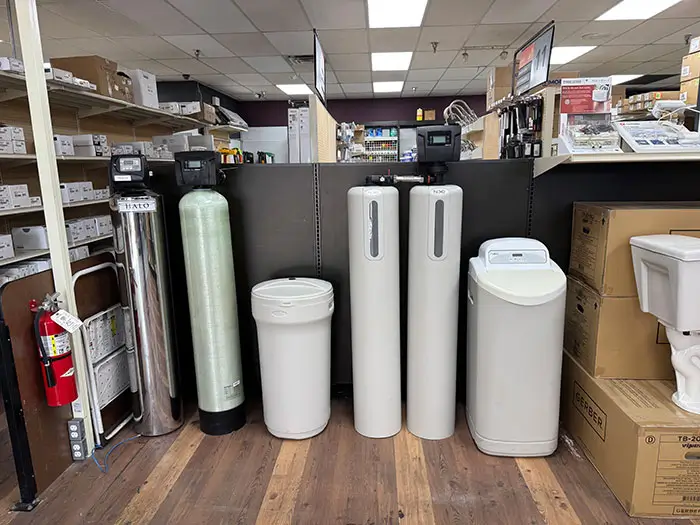
Water softeners are not a one-size-fits-all solution. The right system depends on your household size, water usage patterns, the hardness level in your water supply, and whether your home uses a septic system. Understanding the main types helps frame the conversation you should have with a plumbing professional before installation.
Salt-based water softeners are the most widely used and consistently effective option for addressing hard water. They use an ion-exchange process that removes calcium and magnesium from the water supply, replacing them with sodium ions. The result is genuinely softened water that reduces scale buildup in pipes, extends the life of water heaters and appliances, and improves the effectiveness of soaps and detergents. For North Las Vegas homes with significant hardness levels, salt-based systems deliver the most reliable performance.
Salt-free systems take a different approach, conditioning the water to prevent minerals from adhering to pipe surfaces rather than removing them outright. These systems require less maintenance since there is no salt to replenish and no regeneration cycle, and they produce no discharge water. They are a practical choice for homeowners who want scale prevention without the ongoing salt management required by traditional softeners.
Dual-tank systems address one of the few limitations of standard salt-based softeners, which must cycle through a regeneration process during which softened water is temporarily unavailable. A dual-tank setup keeps one tank in service at all times while the other regenerates, ensuring a continuous supply of softened water regardless of usage volume. This configuration works particularly well for larger households with high and consistent water demand.
Across all types, the benefits extend beyond comfort. Softened water protects plumbing infrastructure, reduces energy costs associated with scale-impaired water heaters, and extends the service life of dishwashers, washing machines, and other water-using appliances.
How Water Softeners and Septic Systems Work Together in North Las Vegas Homes
For North Las Vegas properties with septic systems, the relationship between water softening and septic health is an important consideration often overlooked. A well-chosen and properly maintained water softener actually supports septic system performance rather than compromising it.
Reduced harsh mineral load: Hard water carries elevated levels of calcium and magnesium, which can accumulate in septic tank components and contribute to buildup that can affect function over time. Softened water introduces fewer minerals into the system, reducing that accumulation.
Improved drainage flow: Scale deposits that form in supply lines and drain connections from hard water can gradually restrict flow. Softer water minimizes that buildup throughout the connected plumbing, supporting better drainage into and through the septic system.
Extended septic lifespan: By reducing the physical stress that hard water deposits place on tank components and distribution lines, water softening extends the service life of the septic infrastructure as a whole.
Consistent system maintenance: Both systems perform best when maintained on a regular schedule. Coordinating inspections of the water softener and septic system allows a licensed plumber to assess how each affects the other and catch developing issues before they become costly failures.
Working in homes across North Las Vegas, we consistently find that properties with well-matched water treatment and septic maintenance programs experience fewer emergency calls and lower long-term repair costs.
Why Septic Systems Matter for North Las Vegas Residents
Nearly a quarter of homes in the North Las Vegas area rely on septic systems for wastewater management. For those homeowners, the septic system is not a background consideration. It is a critical piece of infrastructure that directly affects daily function, property value, and environmental responsibility.
A properly functioning septic system treats household wastewater on-site, reducing demand on municipal treatment infrastructure and returning treated water to the soil in a controlled way. In a region where water conservation is a genuine community concern, on-site treatment is a meaningful contribution to sustainable resource management.
From a property value perspective, a well-maintained septic system is an asset. Buyers evaluating homes with septic systems look closely at maintenance records and condition assessments. A system with documented regular service and no history of failures signals responsible ownership and eliminates a common source of negotiation friction during a sale.
Deferred septic maintenance, on the other hand, compounds quickly. What begins as a tank that needs pumping can develop into drain field saturation or component failure if ignored. The cost difference between routine maintenance and emergency remediation is substantial, and the disruption to daily life during major septic repairs is significant. Prioritizing your septic system is one of the most direct ways to protect both your household and your investment.
Top 5 Common Septic System Problems and How to Address Them
Based on what we see in North Las Vegas properties, these are the most frequently encountered septic system issues and what professional evaluation and service look like for each:
Clogged drains: Persistent or widespread slow drainage that does not respond to standard clearing often points to a blockage at or near the septic inlet. A plumber can perform a thorough inspection to determine whether the issue is in the drain line, at the tank inlet baffle, or within the tank itself, and clear it properly without damaging the system.
Slow draining across multiple fixtures: When drainage slows throughout the home rather than at a single fixture, the septic tank is often approaching or at capacity. Tanks typically require pumping every 3 to 5 years, depending on household size and usage, and a system past that interval will begin to back up into the drain lines.
Foul odors: Sewage odors inside or outside the home indicate that gas is escaping from the system at a point where it should not. This could reflect a damaged inlet or outlet baffle, a cracked tank, or a compromised vent line. A professional inspection identifies the source and determines the appropriate repair.
Pooling water near the drain field: Standing water above the drain field, particularly when it has not rained recently, indicates the drain field is saturated and not absorbing effluent at the proper rate. This is a serious condition that requires professional assessment to determine whether the field can be restored or needs to be replaced.
Backups into the home: Sewage backing up into fixtures is an emergency that requires immediate professional attention. This typically indicates a full tank, a blocked outlet, or a collapsed line between the house and the tank.
For issues involving the drain lines connecting your home to the septic system, sewer, and drain services can address the problem efficiently without disturbing the tank itself when the issue is isolated to the line.
How to Choose the Right Professional for Your Plumbing Needs
Selecting a plumber in North Las Vegas for water softener installation or septic system service is a decision that deserves careful consideration. Both systems involve infrastructure that affects your home’s daily function and long-term value, and the quality of the work matters.
Start with licensing and experience. Nevada requires plumbing contractors to carry a state license, and any company working on water treatment or septic-connected plumbing should be able to verify its credentials without hesitation. Experience specific to the North Las Vegas area is also a meaningful advantage, since local soil conditions, water hardness levels, and property configurations all factor into how these systems are best approached.
Look at verified customer reviews with attention to consistency and recency. A company that has maintained strong feedback over the years, not just isolated positive experiences, has demonstrated sustained quality. Pay attention to how the company responds to critical reviews, as that interaction reveals a great deal about their approach to customer relationships.
Versatility matters as well. A plumbing company with expertise across water treatment, septic systems, and general plumbing infrastructure can evaluate how each system in your home affects the others. That integrated perspective leads to better recommendations and more coordinated service.
Heritage Plumbing has been serving North Las Vegas and the greater Las Vegas Valley since 1958. Our family-focused approach means every customer receives honest assessments, transparent pricing, and work performed by technicians who take genuine pride in their results. If you are also considering a broader evaluation of your home’s water quality, our water treatment services offer a comprehensive look at your options.
Keeping Your North Las Vegas Home Running Smoothly
Water softeners and septic systems are among the more consequential investments a North Las Vegas homeowner makes in their property’s infrastructure. When both are properly selected, professionally installed, and maintained on a consistent schedule, they work together to protect your plumbing, preserve your appliances, and support the long-term health of your home.
The hard water conditions throughout the Las Vegas Valley make water treatment a practical necessity rather than a luxury, and the septic systems serving a significant portion of North Las Vegas properties deserve the same level of proactive attention. Together, these systems contribute directly to comfort, property value, and sustainability.
Contact our team today to schedule a consultation and find out which water softening and septic maintenance solutions are the right fit for your North Las Vegas home.